Financial Reporting Software

​​​​​​​
Organizations need timely, accurate financial information to make informed decisions. Unfortunately, many reporting processes still rely on disconnected spreadsheets, manual updates, and time-consuming report preparation.

Dynamic Budgets helps organizations centralize financial reporting while providing greater visibility into budgets, forecasts, and actual performance. Finance teams, executives, and department leaders gain access to the information they need through standard reports, dashboards, budget-to-actual analysis, and flexible ad hoc reporting capabilities.

Leverage Excel for Ad Hoc Analysis
Dynamic Budgets centralizes budgeting and forecasting while allowing users to perform ad hoc reporting and financial analysis through Excel when additional flexibility is needed.

Common Reporting Challenges

Organizations often struggle with:
  • Manual reporting processes
  • Spreadsheet dependency
  • Delayed reporting cycles
  • Limited financial visibility
  • Multiple data sources
  • Budget-to-actual analysis
  • Multi-entity reporting
  • Report creation bottlenecks
  • Limited self-service reporting
  • Ad hoc reporting requests
​​​​​​​As reporting requirements grow, organizations often spend too much time gathering data and creating reports instead of analyzing results and making decisions.

​​​​​​​

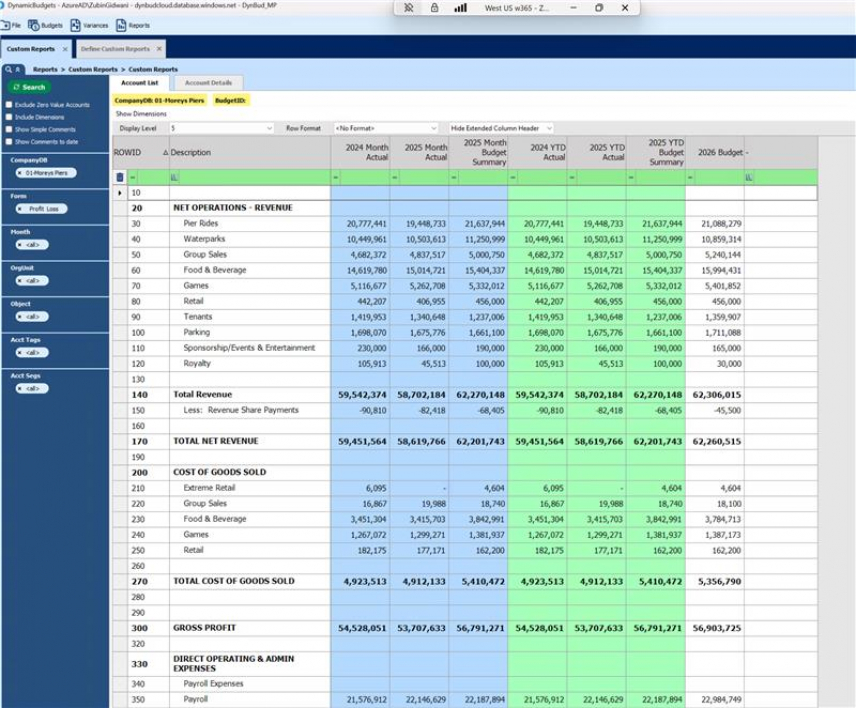
customp-lreport_usingrowlayout

Why Organizations Choose Dynamic Budgets

Real-Time Financial Visibility
Gain access to timely financial information across budgets, forecasts, and actual results to support better decision-making.

​​​​​​​Budget-to-Actual Reporting
Easily compare plans against actual performance to identify variances, monitor accountability, and improve financial outcomes.

Ad Hoc Reporting and Analysis
Empower users to create reports and analyze data without relying on IT, report writers, or complex spreadsheet processes. Quickly answer business questions, investigate variances, and gain insights when they are needed most.

Forecast Reporting
Track forecast performance, monitor trends, and evaluate future financial expectations using centralized reporting tools.

Multi-Entity and Consolidated Reporting
Create reports across companies, business units, departments, locations, properties, programs, or entities while maintaining visibility into consolidated results.

User-Friendly Reporting
Provide Finance, executives, managers, and operational leaders with easy access to financial information through intuitive reporting tools.

Faster Reporting Cycles
Reduce manual effort and accelerate financial reporting processes while improving confidence in the data.

ERP Integration
​​​​​​​​​​


Financial Reporting Software Use Cases

Budget-to-Actual Reporting


Compare budgets against actual financial performance to identify variances, improve accountability, and support faster decision-making. Dynamic Budgets provides clear visibility into financial results across departments, entities, programs, and business units.


Forecast Analysis


Evaluate forecast performance, monitor changes over time, and identify emerging trends. Dynamic Budgets helps organizations continuously improve planning accuracy through meaningful forecast reporting and analysis.

​​​​​​​​​

Ad Hoc Reporting

​​​​​​​

Business questions don't always fit into standard reports. Dynamic Budgets allows users to quickly create, customize, and analyze reports without waiting for Finance or technical resources. Explore financial data, investigate trends, and gain insights through flexible self-service reporting.
​​​​​​​

Multi-Entity Reporting


Create consolidated reports across multiple companies, departments, business units, locations, and entities while maintaining visibility into detailed financial performance.
​​​​​​​


​​​​​​​​​​​

Executive Dashboards and Financial Reporting


Provide executives and decision-makers with meaningful financial insights through dashboards, management reports, and performance reporting designed to support strategic decision-making.
​​​​​​​

​​​​​​​​​​​​​​​​​​​​​​​​​​


​​​​​​​FAQ


What is financial reporting software?
Financial reporting software helps organizations create, distribute, analyze, and manage financial reports from a centralized platform. It improves visibility into budgets, forecasts, and actual financial performance while reducing manual reporting effort.

How does financial reporting software improve decision-making?
Financial reporting software provides timely access to accurate financial information, helping organizations identify trends, evaluate performance, monitor results, and make more informed business decisions.

What is budget-to-actual reporting?
Budget-to-actual reporting compares planned financial results against actual performance to identify variances, improve accountability, and support ongoing financial management.

What is ad hoc reporting?
Ad hoc reporting allows users to create custom reports and analyze data on demand without relying on predefined report templates. This gives organizations greater flexibility to answer business questions and explore financial information when needed.

How does ad hoc reporting benefit organizations?
Ad hoc reporting improves decision-making by allowing users to quickly investigate issues, analyze trends, create custom views of financial data, and answer unexpected business questions without waiting for new reports to be developed.

Can reporting be consolidated across multiple entities?
Yes. Dynamic Budgets supports reporting across multiple companies, departments, business units, locations, and entities while providing consolidated financial visibility.

Does Dynamic Budgets integrate with ERP systems?

Can department managers access reports?
Yes. Department managers and budget owners can access information appropriate to their roles, helping improve accountability and decision-making across the organization.

Does Dynamic Budgets support forecast reporting?
Yes. Organizations can analyze forecasts, monitor performance trends, compare forecasts to actual results, and make proactive adjustments throughout the year.

Why choose Dynamic Budgets for financial reporting?
Organizations choose Dynamic Budgets because it combines budgeting, forecasting, reporting, dashboards, and ad hoc analysis within a single platform, helping teams improve visibility, reporting efficiency, and financial decision-making.

Turn Financial Data into Actionable Insights


Financial reports should do more than explain the past. They should help shape the future.

Dynamic Budgets helps organizations improve financial visibility through centralized reporting, budget-to-actual analysis, forecast reporting, executive dashboards, and flexible ad hoc reporting capabilities. Empower Finance, executives, and department leaders with the information they need to make faster, more informed decisions.
Whether you're reporting across departments, locations, entities, properties, programs, or business units, Dynamic Budgets helps transform financial data into meaningful business insights.

Schedule a Personalized Demo and experience a better way to report, analyze, and plan.